
Share:
CASER Organizes Workshop on Education and Social Stratification in Contemporary China at NYU
August 8 2026
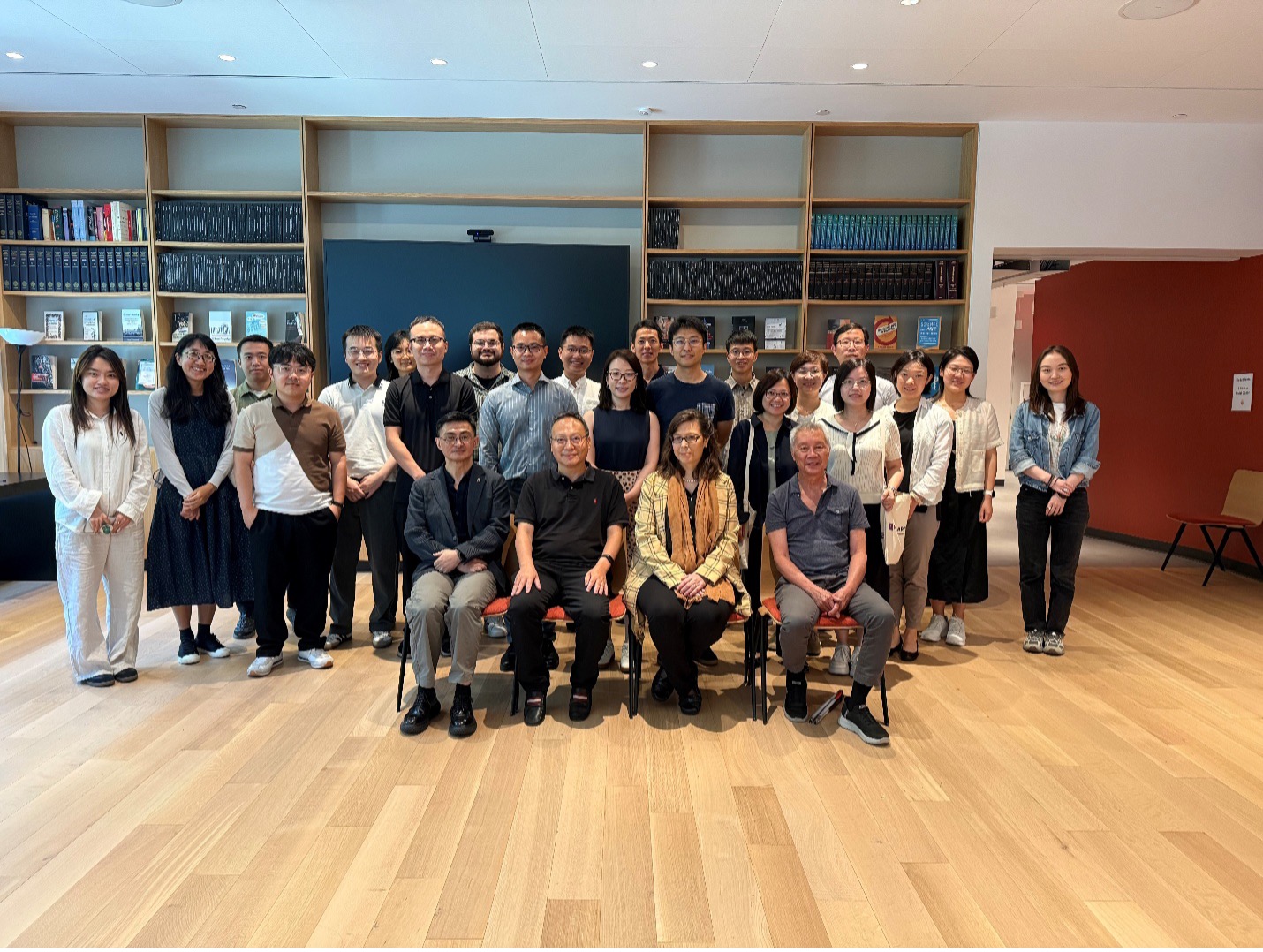
On August 8, 2026, the Center for Applied Social and Economic Research (CASER) at NYU Shanghai and Penn Global at the University of Pennsylvania co-organized the Workshop on Education and Social Stratification in Contemporary China at the Department of Sociology, New York University. The workshop was sponsored by the Fund for Research on China (FRC), NYU Arts and Science.
The workshop brought together scholars and emerging researchers from universities in the United States, mainland China, and Hong Kong to discuss new research on educational inequality, social mobility, and social stratification in contemporary China. The meeting focused particularly on how family background, educational institutions, demographic change, and public policy shape life chances across the life course.
Professor Xiaogang Wu, Director of CASER, and Professor Emily Hannum of the University of Pennsylvania opened the workshop. The day-long program was organized into four research sessions, each centered on a major longitudinal or nationally representative dataset: the Survey of Early Education, Development, and Strengths (SEEDS), the China Family Panel Studies (CFPS), the China Education Panel Survey (CEPS), and the Beijing College Students Panel Survey (BCSPS).
The first session, focusing on SEEDS, examined inequality in early childhood development. Presentations addressed the relationship between caregiver distress and children’s development, grandparenting and early childhood health and development, and the unequal developmental consequences of exposure to natural disasters. The SEEDS project is a large-scale study conducted jointly by researchers from NYU Shanghai, the University of Pennsylvania, and Zhejiang University, with extensive information on children’s development, family socioeconomic circumstances, parenting, health, and community environments.
The CFPS session explored intergenerational processes and demographic change, including educational assortative mating and children’s educational attainment, family background and education–occupation mismatch in early careers, and cohort changes in fertility and the role of educational expansion.
Research presented in the CEPS session addressed several dimensions of inequality among Chinese youth, including body-weight perceptions and relationship formation, cultural capital and educational outcomes, and meritocracy and inequality in China’s Gaokao system. In particular, the presentations highlighted how educational achievement and transitions are shaped not only by individual performance but also by family socioeconomic resources, school contexts, and the geographic structure of educational competition.
The final session drew on the Beijing College Students Panel Survey (BCSPS) to examine longer-term consequences of higher education and social origins. Papers investigated meritocratic beliefs and graduate education, family background and marital matching among highly educated Chinese, and the relationships among gender performance, sexual identity, and educational stratification. BCSPS, launched in 2009 and led by Xiaogang Wu, follows two cohorts of university students from their college years into adulthood and is now one of China’s longest-running longitudinal studies of a college-educated cohort.
Participants represented a broad range of institutions, including NYU and NYU Shanghai, the University of Pennsylvania, the University of Wisconsin–Madison, Zhejiang University, Renmin University of China, the University of Hong Kong, the Chinese University of Hong Kong, and other universities in China and the United States.
By bringing together researchers working with complementary longitudinal datasets spanning early childhood, adolescence, higher education, family formation, and adulthood, the workshop provided a platform for comparative discussion of the mechanisms through which educational and social inequalities emerge and evolve across the life course. It also strengthened collaboration among scholars working on education, inequality, population change, and social mobility in China.