


In January, Li Zhi graduated with his PhD from NYU Shanghai, closing an impactful academic chapter and stepping into the next phase of his career. Committed to rigorous scholarship throughout his doctoral journey, he immersed himself in sociology, flourished within a diverse, cross-cultural academic community, and ultimately carved out his own niche as a full-fledged researcher.
Li, who is from Ezhou, Hubei Province, earned his bachelor’s degree in sociology from Wuhan University and later earned master’s degrees in sociology from Nanjing University and The Pennsylvania State University. In 2021, he applied to NYU Shanghai, seeking to pursue advanced scholarly inquiry at a deeper level.
For Li, pursuing doctoral studies at NYU Shanghai represented far more than an academic advancement; rather, it was a pivotal turning point in shaping his research trajectory. He had long recognized his academic passion lay in social stratification and economic sociology.
The NYU Shanghai Sociology PhD Program, jointly run by NYU Shanghai, NYU’s Graduate School of Arts and Science, and the NYU Department of Sociology, grants students access to NYU’s unparalleled scholarly resources, under the mentorship of globally distinguished sociologists: Yufeng Global Professor of Social Science and Director of the Center for Applied Social and Economic Research (CASER) Wu Xiaogang, as well as National Academy of Sciences members and NYU professors Paula England and Mike Hout.
For Li, the program stood out as the perfect fit for his research aspirations. Out of more than 300 applicants worldwide, he was selected as one of the few successful candidates.
Following an international training model, doctoral students first complete intensive coursework at NYU in New York, then return to NYU Shanghai to focus fully on their doctoral dissertation research. After four and a half years, Li fulfilled all academic and research requirements and graduated this January, half a year earlier than the standard program duration.
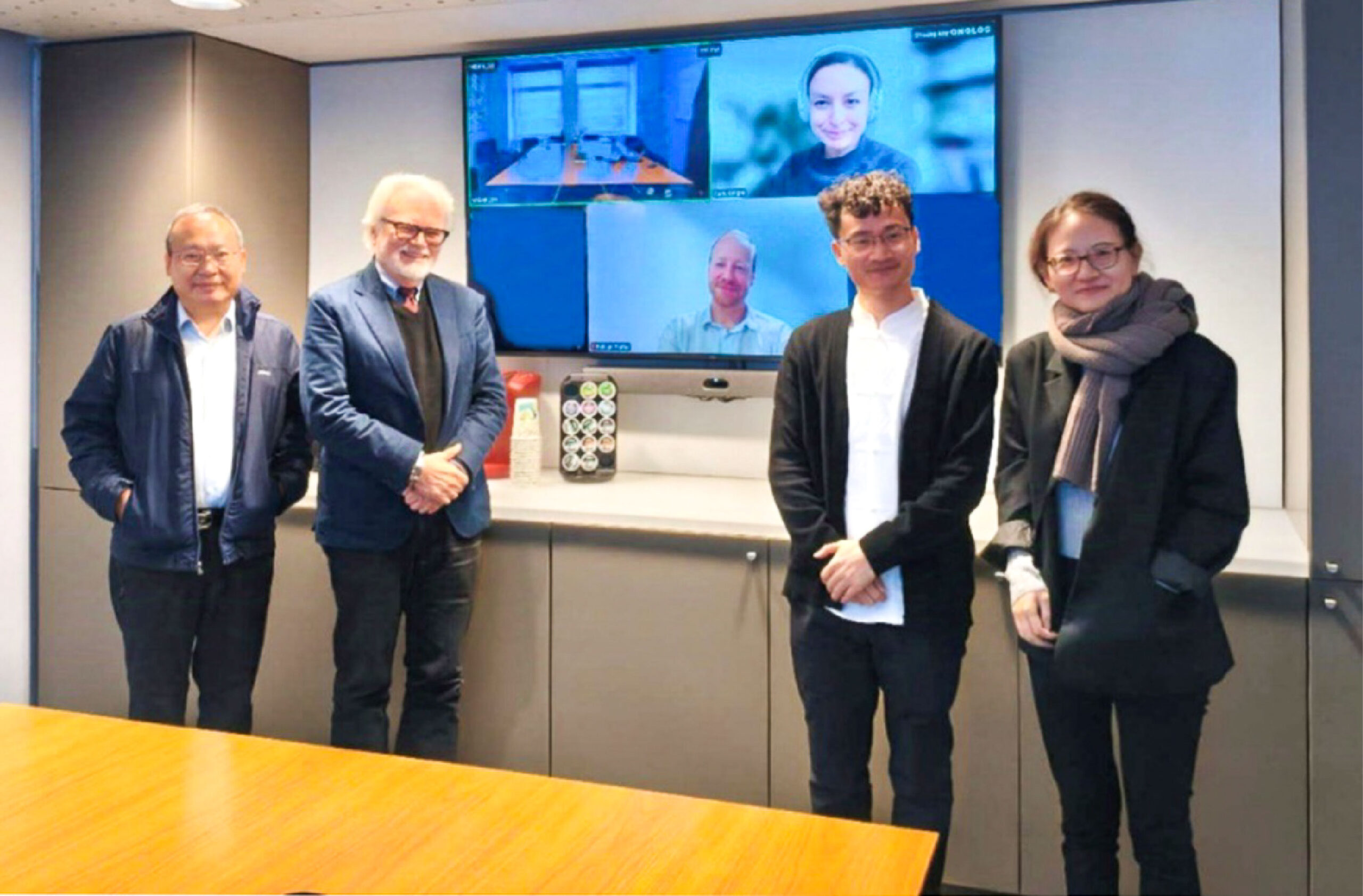
Li Zhi (second from the right) with members of his dissertation committee after he completed his dissertation defense in New York. From left to right: Yufeng Global Professor of Social Science Wu Xiaogang, NYU Professor of Sociology Mike Hout, and NYU Associate Professor of Sociology Siwei Cheng.
Li’s research spans social inequality, economic sociology, and computational social science. His dissertation, Three Essays on Wealth Inequality in the Era of Financialization, focused on differences in housing and stock investment among families in China and the United States, examining how these investment patterns shape wealth accumulation and inequality across social groups. In Li’s view, discussions of inequality can no longer focus solely on income or intergenerational transmission, and must include family participation in real estate and financial markets as a lens for understanding wealth gaps.
Li said he found the program’s interdisciplinary and cross-regional training model most rewarding. At CASER, which was founded by Professor Wu, he received systematic training in computational social science methods, including text analysis, social network analysis, and spatial analysis. He served as a teaching assistant for core programs and courses, including the Summer Institute in Computational Social Science (SICSS) and Introduction of Social Network Analysis. He was also invited to deliver a lecture in Tsinghua University’s summer sociology language training program in 2024. At the same time, he collaborated with NYU scholars on joint research and developed expertise in the use of cutting-edge tools such as mobile location data.
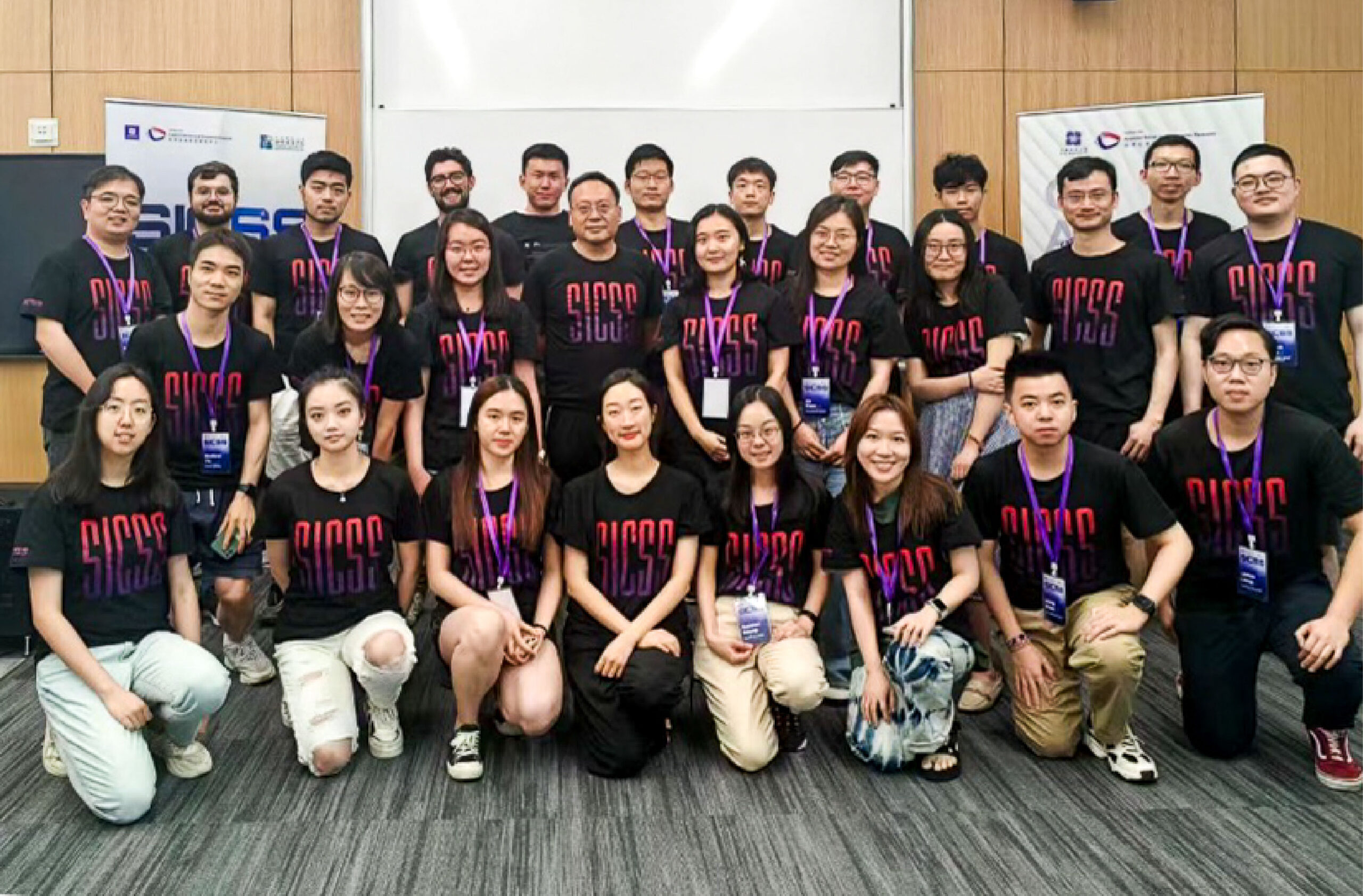
Li Zhi (second from the right in the second row) serving as teaching assistant at Summer Institute in Computational Social Science (SICSS) in 2023
The value of NYU Shanghai’s sociology PhD program, Li said, lies in its ability to connect academic traditions and resources in both China and the United States, while training students to formulate research questions from a global perspective and deepen their work through close engagement with local experience.
“This cross-national academic perspective, and the ability to mobilize academic resources across borders, is an enormous competitive advantage of NYU Shanghai,” he said.
Looking back on his doctoral journey, Li says he is most grateful for the devoted mentorship from Professor Wu, which had a profound influence on his scholarship. Professor Wu made time every week to meet with him one-on-one, supporting him in everything from research design to data analysis, and even polishing his academic writing.
“Professor Wu taught me that research is not about rushing to publish,” Li said. “It is more meaningful to spend years working patiently, refining your scholarly judgment, opening up a distinctive new area of inquiry, and continuing to dig deep until it becomes something truly important.”
So far, Li has published multiple papers in leading international journals, including Scientific Reports, Social Indicators Research, and the International Journal for Equity in Health. His work has been cited over 130 times on Google Scholar, and several additional manuscripts are currently under revise-and-resubmit (R&R) in journals such as Demography. His research covers a range of important topics, including social inequality and computational social science. He has also been deeply committed to academic service, founding and running the North American Chinese Sociology WeChat group, which now connects more than 480 scholars and serves as a platform for transnational academic exchange.
In addition to coursework and dissertation research, Li took part in academic conferences and early-career scholarly exchanges. He presented multiple times at leading academic meetings, including those of the American Sociological Association (ASA), the Population Association of America (PAA), the International Sociological Association (ISA RC28), and the International Chinese Sociological Association (ICSA).
He also was the recipient of several honors, including the 2025 Robert D. Mare Graduate Student Paper Award from the American Sociological Association’s Section on Inequality, Poverty, and Mobility, travel grants from both the International Sociological Association and the International Chinese Sociological Association in the same year. At NYU Shanghai’s 2024 Postdoctoral and Doctoral Research Assembly, Li was named Best Presenter.
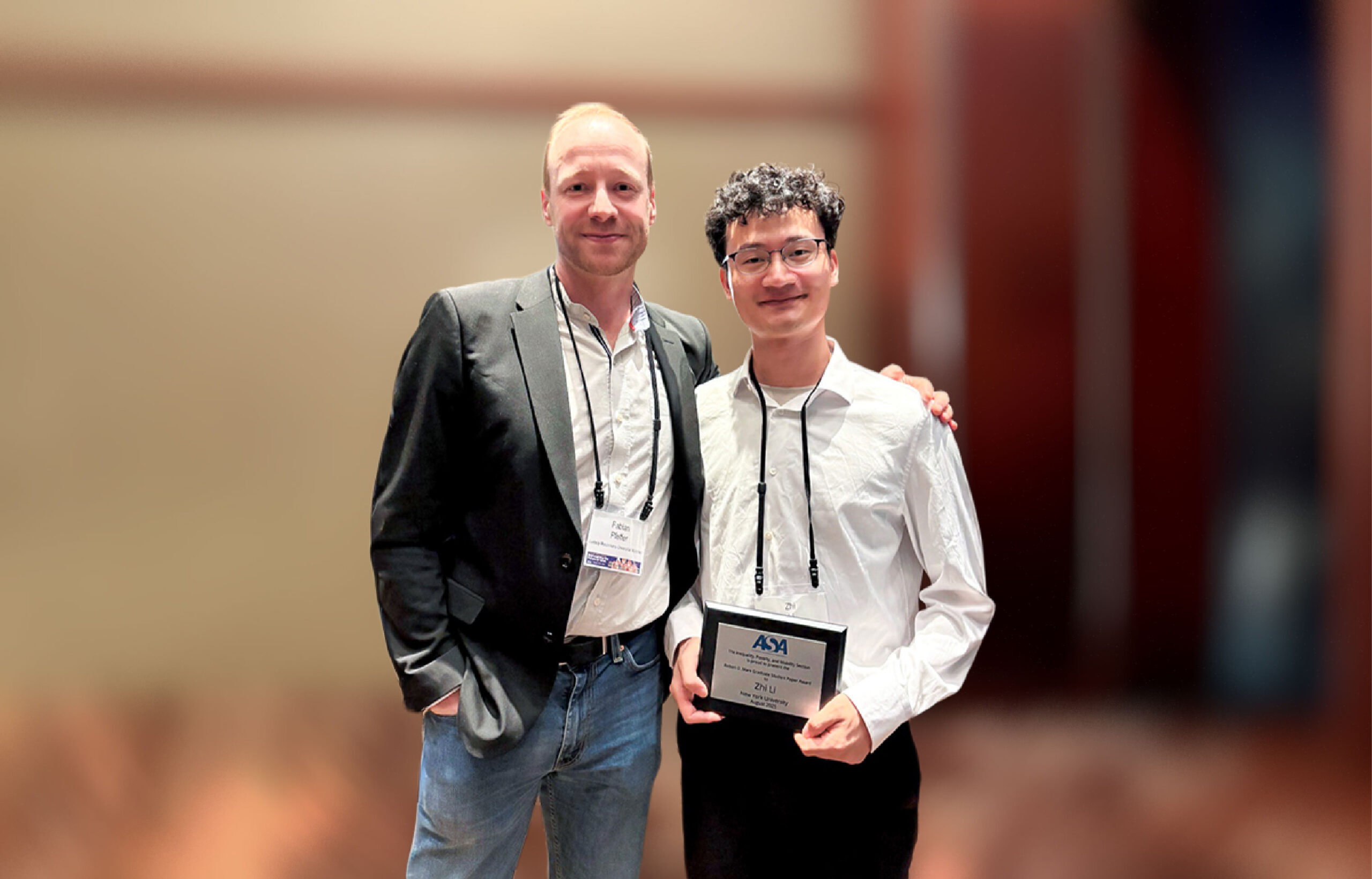
Li received the 2025 Robert D. Mare Graduate Student Paper Award from Ludwig-Maximilians-University (LMU) Munich Professor of Sociology Fabian Pfeffer.
Li also participated in academic workshops in Shanghai, where he exchanged with peers at institutions such as Fudan University and Shanghai Jiao Tong University. In his view, these experiences not only helped him strengthen his research, but also allowed him to define his own academic direction.
Beyond his research, Li stayed open-minded and actively engaged in campus activities. He participated in interdisciplinary exchange activities such as NYU Shanghai’s PhD Crossing and shared his work at doctoral research showcases on campus. For him, conversations with peers from different disciplines were not simply a way to expand his social circle, but also a way to broaden his research horizons and better understand real-world issues. These experiences reinforced his belief that sociology is not confined within disciplinary boundaries, but can continue to grow through exchanges with fields such as technology, urban studies, and computation.
In May, Li joined the School of Social and Behavioral Sciences at Nanjing University as a research assistant professor, where he continues his work on wealth inequality, economic sociology, and computational social science, beginning a new chapter that combines both teaching and research.
“It has been deeply rewarding to see Zhi’s intellectual growth over the years,” Professor Wu Xiaogang. “I have no doubt that he will continue to make meaningful contributions to the field.”